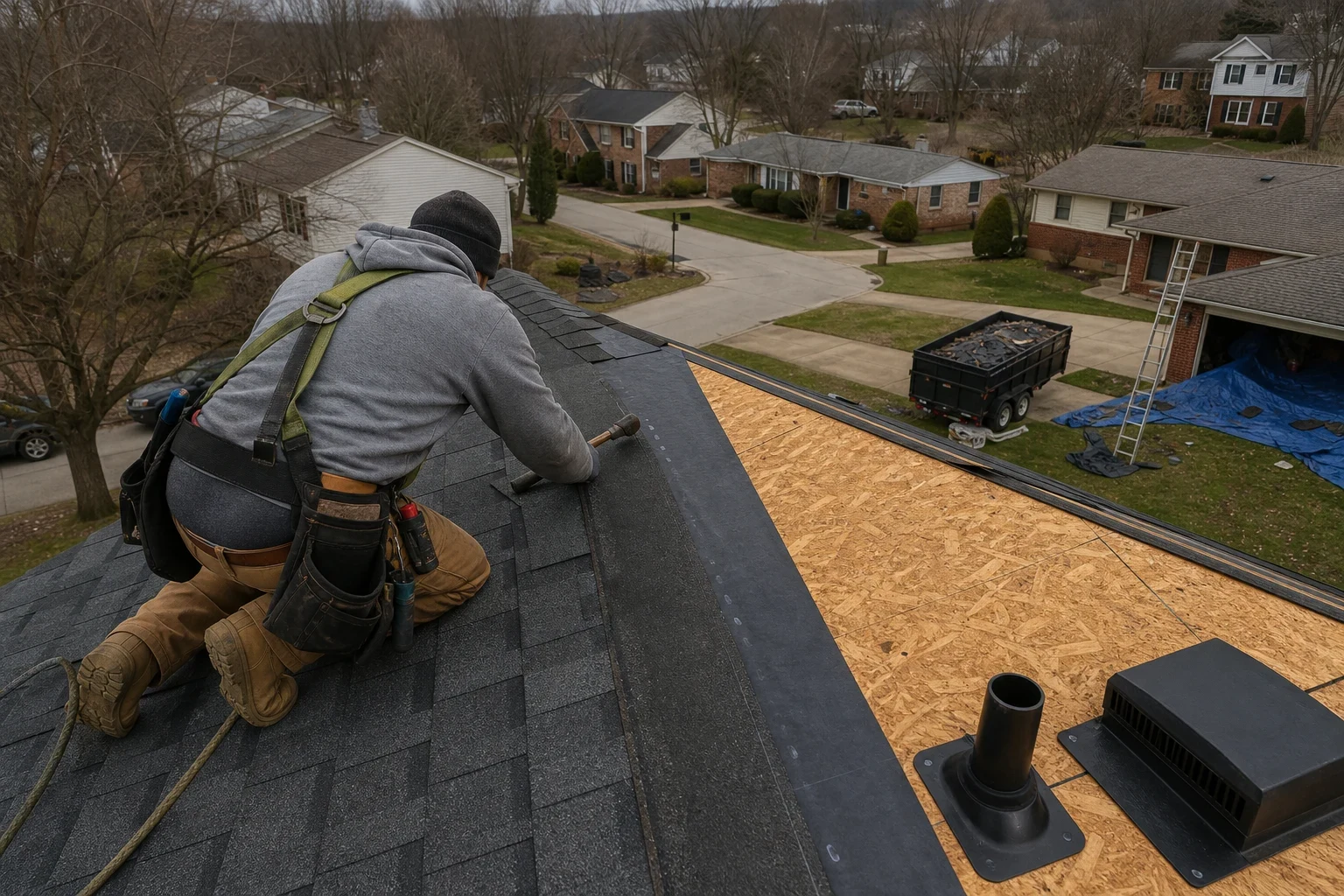
ServicesRoof Inspections
Roof Inspections in Hebron, With Photos of What We Find
We look over the whole roof and the attic under it, then show you photos of what we found. You get a straight answer on what's fine, what needs watching and what needs work. The inspection is free, and there's no sales pitch at the end.
What a roof inspection is for
A roof can look fine from the driveway and still be letting water in. Most trouble starts small. A lifted shingle, a cracked rubber boot around a vent pipe, flashing that pulled loose at the chimney. An inspection finds those things while they're still cheap to fix.
It makes sense before you buy or sell a house, once your shingles have been up for fifteen years or so, or any time a ceiling spot appears and the source isn't obvious. Our winters swing above and below freezing again and again, and that works on sealant and flashing, so a spring check catches what the cold loosened before summer storms find it.
We tell you what we'd tell a neighbor over the fence. When your roof still has plenty of life in it, you'll hear that from us. When a small roof repair will do the job, that's all we recommend.
What we check on every inspection
Shingles and surface
We look for missing, cracked or curled shingles, bald spots where the granules have washed off, and nails backing out. We also check that shingles still lie flat and sealed. Unsealed tabs are the first to lift in a wind.
Flashing and pipe boots
Water most often finds its way in around chimneys, skylights, wall joints and vent pipes. At each one we look over the metal, check that the caulk is still holding and test the rubber boot for cracks.
Attic and roof decking
From inside the attic we look for water stains, dark spots on the wood, damp insulation and daylight where there shouldn't be any. If the roof feels spongy as we walk it, the plywood underneath may be going bad, and we mark where.
Ventilation
A roof that can't breathe bakes its shingles in summer and grows frost on the decking in winter. We check that intake and exhaust vents are open and working together.
Gutters and roof edges
Clogged or sagging gutters push water back under the roof edge and into the fascia. We note what we see and whether it's a quick cleanout or work for our gutters service.
Photos and a plain summary
You get photos of each problem and a short written summary of what we found. We list items by what matters most, so you know what can wait.
Signs it's time to have your roof looked at
- A stain on a ceiling or wall
- Brown rings upstairs usually mean water has been getting in for a while. Water can travel a few feet along a rafter or the underside of the boards before it falls, so the hole on the roof may be well away from the mark on your ceiling.
- Shingle grit in the gutters
- A little grit on a new roof is normal. A steady pile on an older roof means the shingles are wearing thin.
- Ice along the eaves last winter
- Thick ice at the roof edge pushes meltwater back under the shingles. It often points to attic heat or airflow problems that are worth a look.
- A hard wind or hail storm
- Storm damage isn't always visible from the ground. If the houses around you are getting roof work after a storm, have yours checked. Our storm damage repair page covers what happens next.
- You don't know the roof's age
- Buying a house, selling one, or just never told how old the roof is. An inspection gives you a real picture instead of a guess.
How a free inspection goes
- 1
You call and we set a time
Tell us what you've noticed and we'll pick a day that works for you. You don't need to be home for the roof part, but we'd like a few minutes in the attic if you are.
- 2
We start on the ground
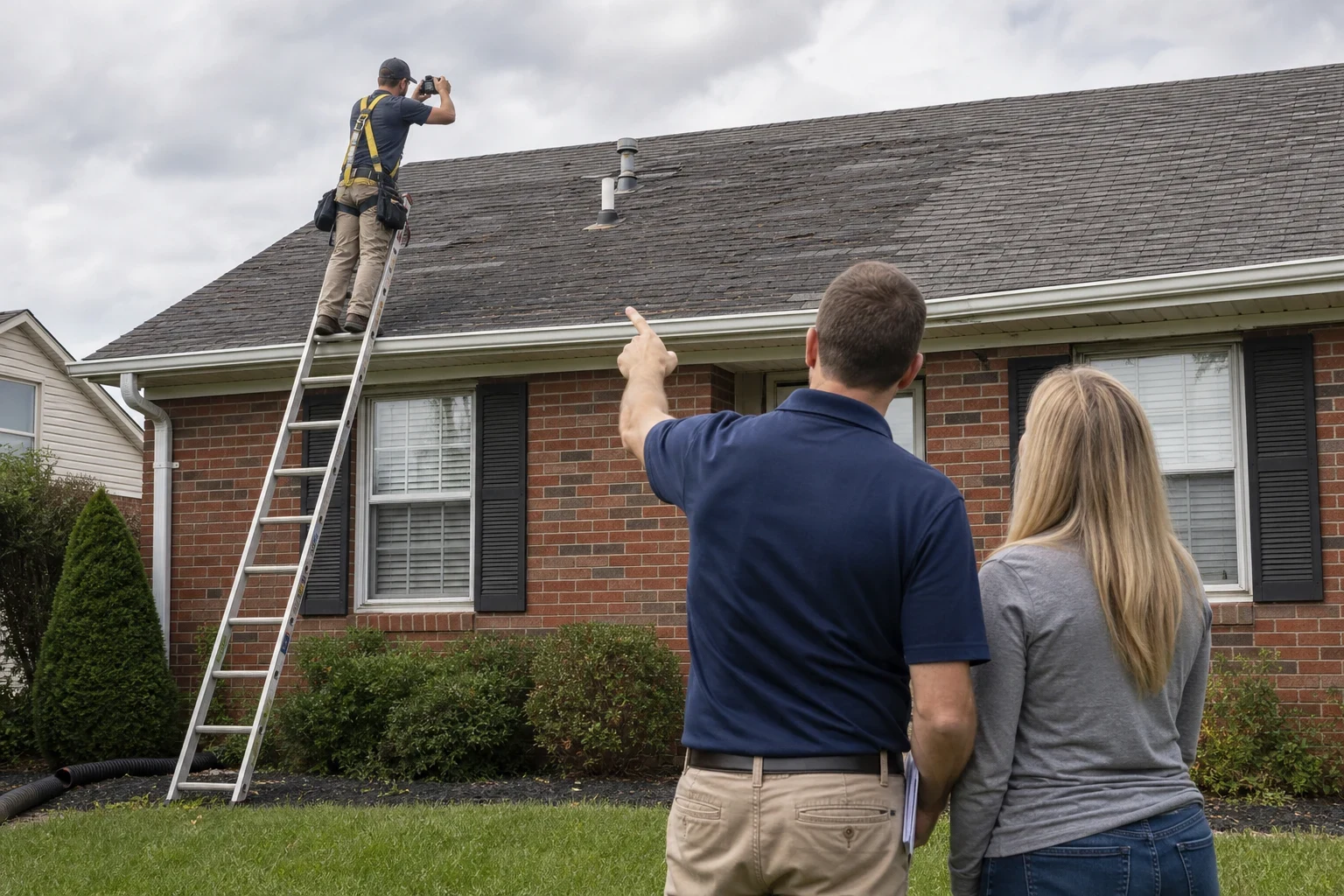
We walk around your home first. Gutters, downspouts, soffits and the siding near the roofline all tell us something before we climb.
- 3
On the roof and in the attic
We set the ladder on solid footing and walk the roof if it's safe. If it's too steep or wet to walk, we check it from the edges and tell you that's what we did. Then we look at the underside from the attic.
- 4
We go over the photos with you
We sit down on the porch or at the kitchen table and show you what we saw. You can ask anything. No pressure, no clipboard pitch.
- 5
You decide what's next
If something needs fixing, we give you a free estimate. If the roof is in good shape, we tell you that and suggest when to check it again.
What the inspection costs, and what moves repair prices
The inspection costs you nothing. If we find work, we put the price in a free estimate before you agree to anything. Right now we're also offering $50 off your first service call for a limited time. Here's what changes the price of the work itself.
- How much is damaged
- A few shingles and a pipe boot is a short job. A whole slope with worn shingles is a bigger one.
- What's under the shingles
- Rotted decking sometimes only shows up once shingles come off. If the attic shows signs of it, we tell you up front so it isn't a surprise later.
- Pitch and access
- Steep roofs and two-story homes take more safety gear and more time. That shows up in labor.
- Matching old shingles
- Some older shingle lines aren't made anymore. Finding a close color match can take extra work, and we'll tell you how close we can get.
- Repair or replace
- When a roof is near the end of its life, patching it can be money thrown away. In that case we'll explain why roof replacement makes more sense and let you weigh it.
Roof inspection questions
- How long does a roof inspection take?
- Most take about an hour on a typical house. It can run longer if the attic is hard to get into or there's a lot to photograph. We'll give you a rough idea when you call.
- Do I need to be home?
- Not for the roof itself. We do like to get into the attic, since that's where many leaks show first. If you can't be there, we'll go over the photos with you by phone afterward.
- Will you push me toward a new roof?
- We won't. A lot of the roofs we climb only need a small fix, and some need nothing at all, so that's what we tell those owners. When replacement really is the right call, you'll see the photos that brought us to it, and the choice stays yours.
- Will an inspection be useful if I file an insurance claim?
- It can be. The pictures we take and the notes we write give you and your adjuster a clear record of what's damaged and where it sits on the roof. Your insurer decides what the policy covers, not us. We'll gladly walk you through what we saw in plain words.
- How often should a roof be inspected?
- Every year or two is a good habit, plus after any big wind or hail storm. Older roofs are worth checking more often, since small problems grow faster on worn shingles.
- Is there anything I should do before you come?
- Leave room near the house for a ladder and unlock the attic hatch if you can. Keeping pets inside helps too. That's about it.
Find out where your roof stands
One phone call sets up a free inspection. You get photos, a plain answer and no pressure to do anything you don't need.